

Marine fuel supply is not only about purchasing fuel at the lowest available price. The selected fuel must match the vessel requirements, comply with environmental regulations, be available at the required port and arrive within the vessel’s operational schedule.
A wrong fuel grade, delayed delivery or quality issue can lead to operational disruption, additional costs and potential risks for vessel machinery.
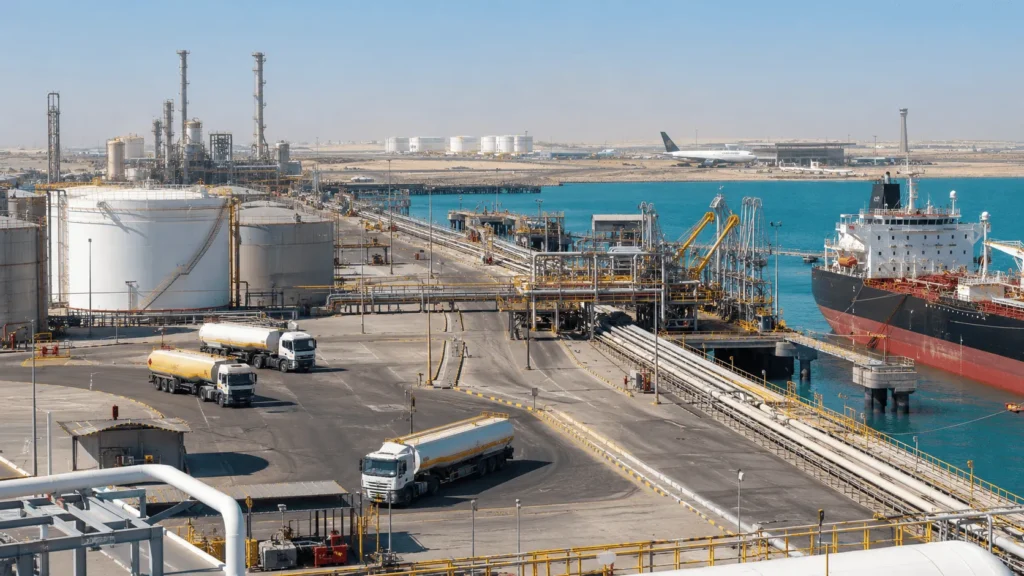
The UAE has become one of the important marine fuel hubs in the region due to its strategic location, major ports and role in international shipping routes. Reliable bunker supply requires proper coordination between fuel selection, logistics, documentation and delivery operations.
Aras Energy supports marine fuel supply and petroleum product trading activities in the UAE and regional markets, helping businesses manage their fuel requirements through reliable sourcing and delivery planning.
What Is Marine Fuel and Bunker Supply?
Marine bunker supply refers to the process of providing fuel required for vessel operations, including main engines, auxiliary engines and onboard systems.
A complete bunker operation includes several steps:
- Selecting the appropriate fuel grade
- Confirming quantity and delivery location
- Coordinating supplier and vessel schedules
- Managing fuel documentation
- Completing safe transfer and sampling procedures
The objective is not only delivering fuel, but ensuring that the product meets operational and regulatory requirements.
Main Marine Fuel Grades Used in Shipping
Different vessels require different fuel types depending on engine specifications, operating routes and environmental requirements.
| Fuel Grade | Common Use | Main Consideration |
| VLSFO | Widely used for international shipping operations | Maximum sulphur limit of 0.50% |
| MGO / LSMGO | Used for low-sulphur requirements and specific operations | Lower sulphur content and easier handling |
| HSFO | Used mainly by vessels equipped with approved scrubber systems | Requires suitable compliance measures |
| Biofuel Blends | Used by operators seeking lower lifecycle emissions | Compatibility and certification must be considered |
VLSFO: The Most Common Marine Fuel Option
Very Low Sulphur Fuel Oil (VLSFO) is one of the most widely used marine fuels after the introduction of stricter sulphur emission requirements.
It allows vessels to operate while meeting the global sulphur limit without requiring an exhaust gas cleaning system.
However, choosing VLSFO should not depend only on sulphur content. Other factors such as viscosity, stability, compatibility and fuel quality characteristics should also be considered.
Two fuels with the same sulphur level may still perform differently inside a vessel’s fuel system.
Marine Gas Oil and Low-Sulphur Fuels
Marine Gas Oil (MGO) and similar low-sulphur distillate fuels are commonly used when vessels require cleaner fuel options.
They may be suitable for:
- Operations in areas with stricter sulphur limits
- Auxiliary engines and generators
- Port operations
- Fuel changeover before entering restricted areas
The exact specification should always be confirmed before delivery to ensure compatibility with vessel requirements.
High Sulphur Fuel Oil and Scrubber-Equipped Vessels
High Sulphur Fuel Oil (HSFO) remains an option for vessels equipped with approved exhaust gas cleaning systems.
These vessels can continue using higher-sulphur fuel while controlling emissions through their approved systems.
Before selecting HSFO, operators should confirm:
- Scrubber availability and operational condition
- Regulatory acceptance
- Fuel availability at the required port
- Economic advantages compared with alternative fuels
Alternative Marine Fuels and Biofuel Blends
The maritime industry is increasingly exploring alternative fuels to reduce environmental impact.
Biofuel blends can allow some vessels to reduce lifecycle emissions while continuing to use existing fuel infrastructure.
However, several factors must be reviewed before use:
- Fuel compatibility with vessel systems
- Blend composition
- Storage requirements
- Availability at the delivery location
- Required documentation
Alternative fuel supply requires careful planning because availability may vary between ports.
How to Select the Right Marine Fuel
The correct fuel choice depends on several operational factors:
- Vessel engine specifications
- Planned voyage route
- Sulphur requirements along the route
- Existing fuel onboard
- Fuel storage capacity
- Scrubber availability
- Port availability
A vessel operating between different regions may require careful fuel planning to ensure compliance throughout the voyage.
Fuel selection should always consider both current operation and upcoming route requirements.
Marine Fuel Quality and Specifications
Marine fuel quality is not determined only by sulphur content.
Important characteristics include:
- Density
- Viscosity
- Flash point
- Water content
- Sediment levels
- Stability
- Compatibility
- Contamination risks
Poor-quality fuel can create problems such as filter blockage, fuel system issues and increased maintenance requirements.
For this reason, fuel specifications should be clearly defined before purchase and delivery.
Why Fuel Compatibility Matters
A vessel may receive fuel that meets the required specification but still experience problems if it is incompatible with fuel already stored onboard.
Mixing incompatible fuels can lead to:
- Sludge formation
- Filter blockage
- Fuel separation problems
- Engine performance issues
Where possible, new bunker fuel should be stored separately until compatibility has been evaluated.
Bunker Supply Process in the UAE
A successful bunker operation requires coordination between the supplier, vessel operator, port service providers and logistics teams.
The process usually includes:
Fuel Request and Planning
The buyer provides vessel details, required fuel grade, quantity, delivery location and expected timing.
Commercial Confirmation
Price, specification, quantity and delivery conditions are agreed before the operation.
Operational Coordination
The delivery schedule, vessel readiness, location and transfer requirements are confirmed.
Fuel Delivery
Fuel is transferred while monitoring safety procedures, quantity and operational conditions.
Documentation and Sampling
Required documents, delivery records and fuel samples are completed to support compliance and quality verification.
Bunker Delivery Documentation
Proper documentation is an essential part of marine fuel supply.
Important documents may include:
- Bunker Delivery Note
- Fuel quality information
- Delivery quantity records
- Sampling records
Accurate documentation helps both suppliers and vessel operators manage compliance requirements and resolve potential disputes.
Common Challenges in Marine Fuel Supply
Marine fuel operations can face several challenges, including:
- Incorrect fuel selection
- Delivery delays
- Lack of coordination between parties
- Fuel quality concerns
- Incomplete documentation
- Limited availability at certain locations
Effective planning and reliable supplier coordination help reduce these risks.
How to Choose a Marine Fuel Supplier in the UAE
Price is only one factor when selecting a bunker supplier.
A reliable supplier should provide:
- Access to suitable fuel grades
- Accurate product information
- Reliable delivery capability
- Clear documentation
- Operational coordination
- Experience with regional marine requirements
A supplier’s ability to manage timing, communication and delivery conditions is an important part of successful bunker operations.
Marine Fuel Supply with Aras Energy
Aras Energy provides marine fuel supply and petroleum product trading solutions in the UAE and regional markets.
Through structured sourcing, logistics coordination and operational support, Aras Energy helps businesses manage marine fuel requirements based on vessel needs, delivery schedules and quality expectations.
The focus is on providing reliable fuel solutions with proper planning, documentation and supply coordination.
Request Marine Fuel Supply in the UAE
For a marine fuel enquiry, provide details such as vessel information, required fuel grade, delivery location, estimated quantity and preferred delivery schedule.
Contact Aras Energy to discuss marine fuel supply, bunker solutions and petroleum product requirements in the UAE and regional markets.
Frequently Asked Questions
What is the most commonly used marine fuel?
VLSFO is one of the most commonly used marine fuels for vessels operating under global sulphur requirements.
Can a vessel use HSFO without a scrubber system?
Generally, HSFO requires an approved compliance method such as an exhaust gas cleaning system.
Is sulphur content the only factor when selecting marine fuel?
No. Fuel quality, compatibility, viscosity, stability and vessel requirements should also be considered.
Why is fuel compatibility important?
Because mixing incompatible fuels can create operational problems such as sludge formation and fuel system issues.
What information is needed for a bunker supply request?
Vessel details, fuel grade, required quantity, delivery location and expected timing are usually required for planning the supply.