

LNG Production and Liquefaction
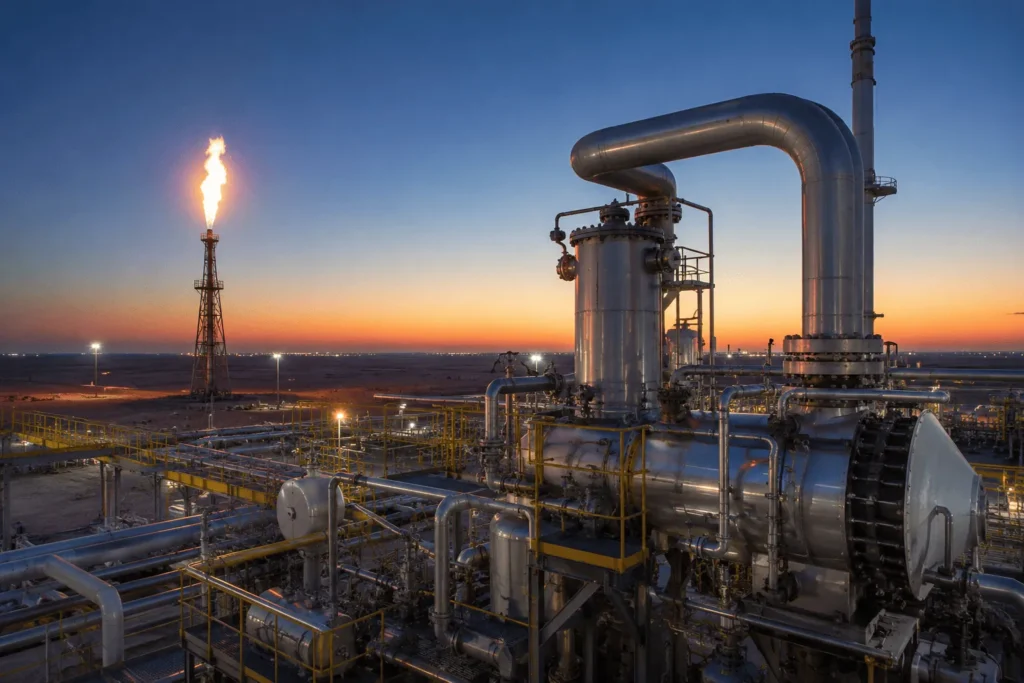
The LNG supply chain begins with the extraction of natural gas from upstream fields. Once extracted, the gas is purified and then cooled to approximately -162°C to convert it into liquid form.
This liquefaction process reduces the volume of gas by about 600 times, making it economically viable to transport over long distances where pipelines are not feasible.
Liquefaction plants are among the most capital-intensive facilities in the energy sector and require advanced engineering and process optimization.
LNG Transportation and Shipping
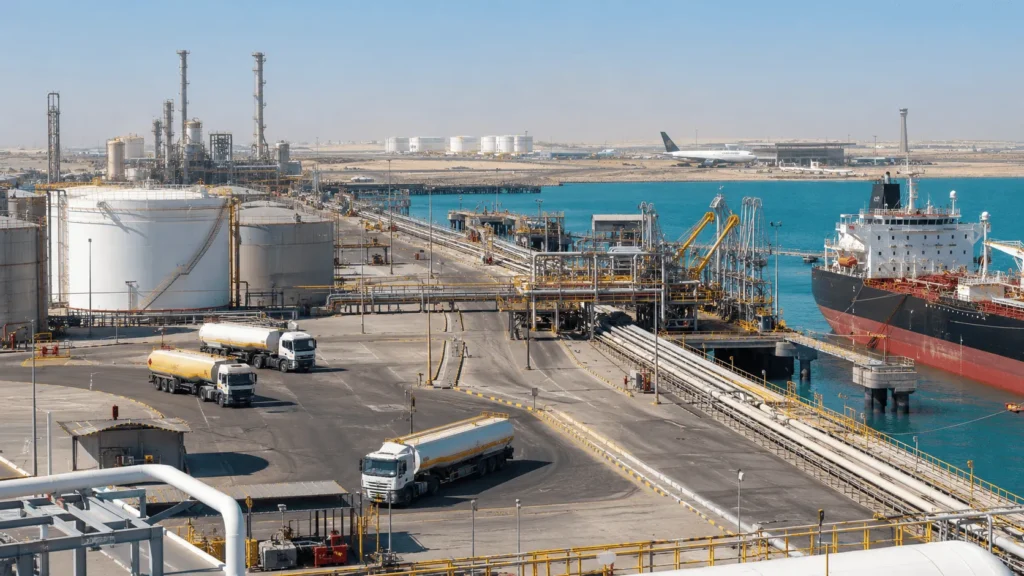
After liquefaction, LNG is transported using specialized cryogenic vessels known as LNG carriers.
Key features of LNG shipping include:
- Insulated storage tanks to maintain low temperatures
- Boil-off gas management systems
- Strict safety and operational standards
Global LNG shipping routes connect major exporting regions such as the Middle East, the United States, and Australia to key import markets in Asia and Europe.
LNG Storage Infrastructure
LNG storage plays a critical role in balancing supply and demand across the value chain.
Storage facilities include:
- Onshore storage tanks at liquefaction and regasification terminals
- Floating storage units (FSUs)
- Strategic reserves for energy security
These facilities must maintain cryogenic conditions and ensure minimal product loss.
Regasification Terminals
At the destination, LNG is converted back into gaseous form through regasification.
Regasification terminals include:
- Heat exchangers to warm LNG
- Vaporization systems
- Pipeline connections for distribution
Floating Storage and Regasification Units (FSRUs) are increasingly used due to their flexibility and lower capital cost.
Global LNG Trade Routes
Global LNG trade is shaped by supply-demand dynamics and geopolitical factors.
Major trade flows include:
- Middle East → Asia
- United States → Europe
- Australia → Asia-Pacific
These routes are continuously evolving based on market demand, pricing, and infrastructure development.
Future LNG Demand
LNG demand is expected to grow due to:
- Transition away from coal
- Increasing energy demand in emerging markets
- Flexibility in power generation
- Role as a transition fuel in energy transition
Despite the rise of renewables, LNG remains a key component of global energy systems.
FAQ
How is LNG transported globally?
Through specialized LNG carriers designed to maintain cryogenic temperatures during transit.
What is an LNG terminal?
It is a facility used for liquefaction, storage, or regasification of natural gas.
Which countries export LNG?
Qatar, the United States, Australia, and Russia are among the largest exporters.
Final Insight
The LNG supply chain is a complex, capital-intensive system that connects global energy markets. Its efficiency and reliability are critical to ensuring energy security and meeting rising global demand.
Management Perspective (Aras Energy)
“The LNG supply chain is a global engineering system where precision, logistics, and infrastructure define energy accessibility across continents.”
— Dr. Mousa Hassan