

What is Carbon Capture Technology
Carbon Capture and Storage (CCS) is a set of technologies designed to capture carbon dioxide (CO₂) emissions from industrial sources before they are released into the atmosphere.
Captured CO₂ is then transported and stored underground or reused in industrial processes. CCS is a critical solution for reducing emissions in sectors where complete decarbonization is not yet feasible.
Carbon Capture Methods
There are three primary methods of carbon capture:
- Post-combustion capture
Captures CO₂ after fossil fuels are burned, commonly used in power plants - Pre-combustion capture
Removes carbon before combustion by converting fuel into a gas mixture - Oxy-fuel combustion
Burns fuel in pure oxygen, producing a concentrated CO₂ stream for easier capture
Each method is selected based on plant design and operational requirements.
Carbon Transport and Storage
After capture, CO₂ must be transported and stored safely.
Transport methods include:
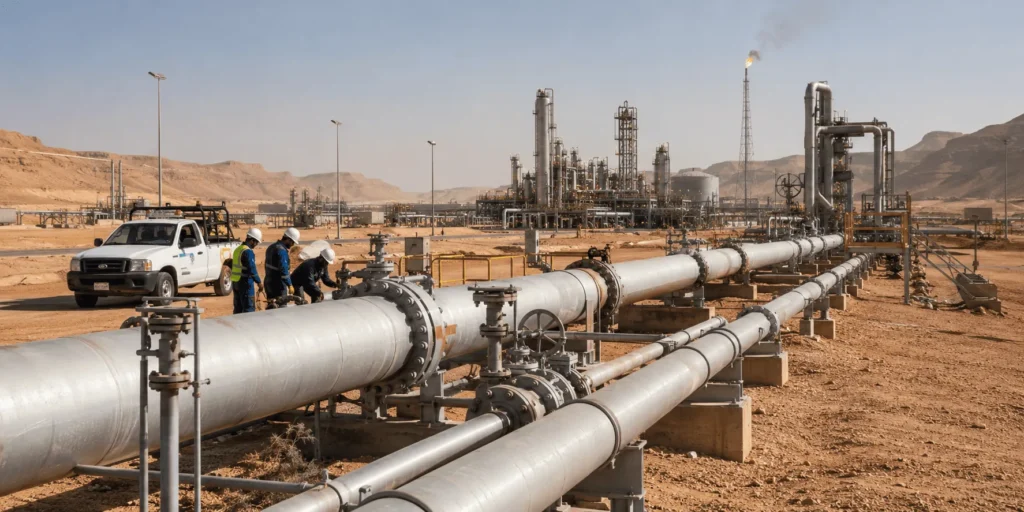
- Pipelines (most common)
- Shipping for offshore storage
Storage options include:
- Depleted oil and gas reservoirs
- Deep saline aquifers
- Geological formations
Long-term storage integrity is essential to prevent leakage and ensure environmental safety.
CCUS in Oil and Gas Industry
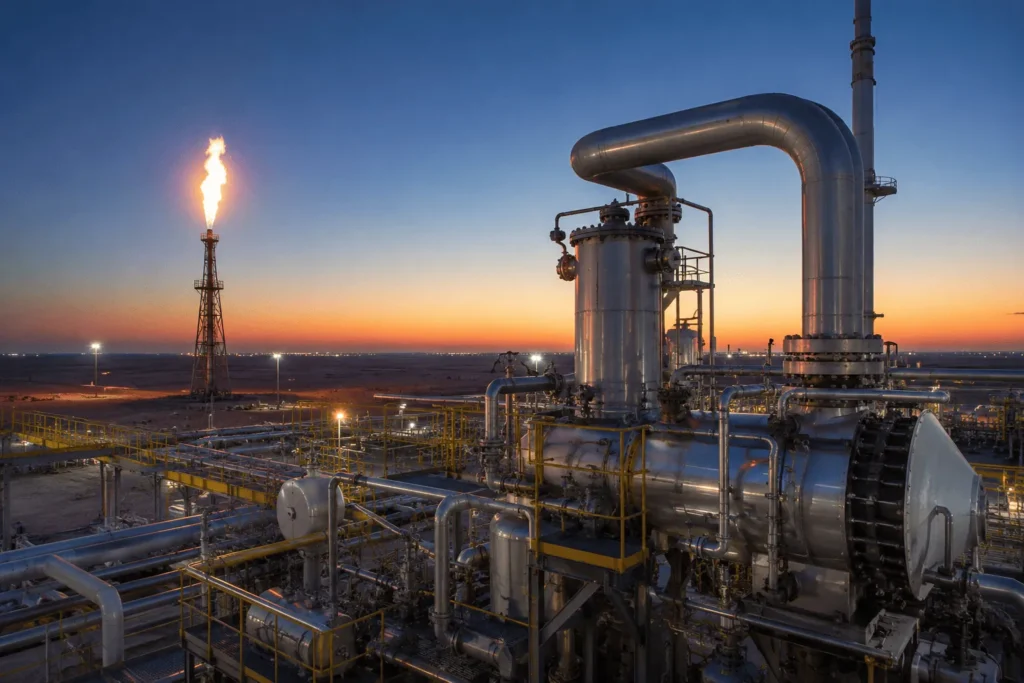
Carbon Capture, Utilization, and Storage (CCUS) is widely applied in the oil and gas sector.
Applications include:
- Enhanced Oil Recovery (EOR) using injected CO₂
- Reducing emissions from refineries and gas processing plants
- Integration with hydrogen production facilities
CCUS allows existing infrastructure to remain operational while lowering carbon intensity.
Global Carbon Capture Projects
Several large-scale CCS projects are currently operational or under development:
- North America → large-scale CCS hubs and pipeline networks
- Europe → carbon storage in North Sea reservoirs
- Middle East → integration with gas and industrial projects
These projects demonstrate the scalability and importance of CCS in global energy systems.
Future of Carbon Capture
The future of CCS depends on:
- Cost reduction through technological innovation
- Strong regulatory support and carbon pricing mechanisms
- Integration with renewable and hydrogen systems
- Expansion of industrial applications
As climate policies become stricter, CCS is expected to grow rapidly.
FAQ
What is CCS technology?
It is a system that captures, transports, and stores CO₂ emissions from industrial sources.
How does carbon capture work?
It separates CO₂ from industrial emissions, compresses it, and stores it underground or reuses it.
Is carbon capture effective?
Yes, it significantly reduces emissions, especially in hard-to-decarbonize industries.
Final Insight
Carbon capture is not just an environmental solution—it is an industrial necessity. It enables energy and heavy industries to transition toward sustainability without compromising production capacity.
Management Perspective (Aras Energy)
“Carbon capture is where engineering meets responsibility. It allows industries to evolve without disrupting the foundations of global energy systems.”
— Dr. Mousa Hassan